

Latest
Story
06 March 2026
International Women’s Day: UN Calls for Stronger Protection for Women and Children from Gender Based and Domestic Violence
Learn more
Story
06 March 2026
Empowering women means empowering the whole society
Learn more
Story
24 February 2026
Empowering young people to take action for sustainable development
Learn more
Latest
The Sustainable Development Goals in North Macedonia
The Sustainable Development Goals are a global call to action to end poverty, protect the earth’s environment and climate, and ensure that people everywhere can enjoy peace and prosperity. These are the goals the UN is working on in North Macedonia:
Story
06 March 2026
International Women’s Day: UN Calls for Stronger Protection for Women and Children from Gender Based and Domestic Violence
Skopje, 6 March 2026: “As North Macedonia prepares to mark International Women’s Day 2026, the UN family in North Macedonia joins women, girls, families, and communities across the country - and around the world - in calling for a future where every woman and every child enjoy their full rights, equal justice, and a life free from violence, discrimination, and fear. “This year’s commemoration comes in the shadow of a heartbreaking tragedy in which another two lives were lost to domestic violence. This tragedy is a painful reminder that gender-based and domestic violence remains one of the most pervasive and devastating forms of violence affecting women and children.“While acknowledging the country’s progress in aligning its legislation with the Istanbul Convention, the Convention on the Rights of the Child, and the ILO Violence and Harassment Convention, 2019 (No. 190), tragedies like this remind us that legal commitments must translate into real protection. Evidence shows that 45% of women in North Macedonia have experienced violence from an intimate partner, while reporting remains extremely low, with only around 2% of survivors contacting the police. “Violence in the home is not a private matter - it is a grave violation of human rights. When a woman is unsafe, children are unsafe. Children who witness or experience violence face lifelong consequences to their wellbeing, development, and emotional security.“When it comes to protecting women and children from gender-based and domestic violence, time is of the essence. Delays in responding to reports put women and children at greater risk and undermine trust in protection systems. In too many cases procedures are delayed and victims are returned to the very environments where violence occurred, highlighting the urgent need for effective and timely intervention. Protection systems must also ensure that all women and children can safely access support, including those who may face additional barriers to reporting violence or seeking assistance because of their displacement, legal status, or heightened vulnerability.“On this International Women’s Day, the theme is “Rights. Justice. Action for All Women and Girls” calls on all of us - governments, institutions, communities, employers, neighbours, and families - to give support, attention, resources, and action so children and women can gain safety, dignity, justice, and hope. For gender-based and domestic violence, this means:Give accountability, gain justice: Systems must respond rapidly and effectively to every report of violence, ensuring that women and children can trust that protection services will act.Give attention, gain early prevention: Early identification of risks through schools, health centres, social services, law enforcement and communities can prevent harm before it escalates. Give protection, gain safety: Women and children need safe shelters for emergency placement, but more efforts need to focus on removing the perpetrators, holding them accountable and working with them to prevent future cases. Women and children also need survivor centred services, legal aid, and timely institutional response.Give investment, gain stronger services: A well-resourced social service workforce is vital trained, equipped, and supported to protect women and children.Give support, gain stronger families and communities: Programmes that promote positive parenting, gender equality, and nonviolent relationships change norms and reduce violence long-term.Give a voice, gain societal change: Community solidarity, speaking up against violence, challenging harmful norms, and advocating for women’s safety, including at the workplace, helps shift attitudes and prevent abuse. Give restorative programmes, gain lasting change: Holding perpetrators accountable should go hand-in hand with programmes focused on behaviour change, anger management, and education around gender-based violence. Give equal opportunity, gain a thriving economy: Women’s economic empowerment and quality employment, housing, and care services are concrete investments providing stable living conditions and professional pathways for the next generation.Give equality in norms, gain respect and safety: Addressing gender stereotypes and harmful social norms is key to preventing violence. Through education, media, and community engagement, societies can promote gender equality, challenge discrimination, and foster relationships based on respect and shared responsibility.“The UN family in North Macedonia stands in solidarity with all women and all children in the country. We remain committed to supporting national authorities, institutions, and communities to strengthen prevention, protection, and response systems - ensuring that no woman and no child live in fear.“This International Women’s Day, let us commit to a society where every woman and every child is safe, protected, and respected - at home, in school, and in the community.”
1 of 5

Story
06 March 2026
Empowering women means empowering the whole society
To amplify the voices of young women as drivers of change and to highlight both progress and remaining challenges in the field of gender equality, International Women’s Day was marked with a series of activities emphasizing the need to reaffirm our shared commitments to gender equality, justice, and action.The event, jointly organized by the Ministry of Social Policy, Demography and Youth, the Ss. Cyril and Methodius University in Skopje, and the United Nations in North Macedonia, is part of the activities marking International Women’s Day 2026, which globally carries the theme: “Rights. Justice. Action for all women and girls.”The event aimed to promote women’s leadership in North Macedonia by opening discussions on the issues affecting young women in their pursuit of leadership roles, sharing experiences of current women leaders, and promoting a mentoring network for young women.In his address, Fatmir Sabriu, State Secretary for Social Policy, Demography and Youth, reflected on the recent tragedy that shook the entire society. As he said, “behind that tragedy stand many questions—about the system, about violence, about the responsibility of institutions, but also about the responsibility of every individual.” He emphasized that this 8 March is not only a day for greetings and celebration, but also a symbolic reminder of the need to build a system that works, and individuals who carry both personal and social responsibility. He also referred to the national regulatory framework addressing the challenges in this area.“We have taken significant steps in the fight against gender-based and domestic violence. We adopted the Law on Prevention and Protection from Violence against Women and Domestic Violence, strengthened the criminal provisions with a clear definition of gender-based violence and introduced new criminal offenses, and prepared the National Strategy for Prevention and Protection from Gender-Based and Domestic Violence 2026–2033, which will contribute to a clearer, more coordinated, and more accountable system. In parallel, we established multisectoral support services for survivors and invested in raising public awareness. But laws and institutions are only part of the solution—the real change begins with responsibility at the individual level,” Sabriu stressed.By amplifying the voices of young women as agents of change, the dialogue aims to inspire their leadership ambitions, connect ongoing reforms with the broader process of women’s empowerment, and reaffirm shared commitments to gender equality, justice, and action.“As the oldest and largest university in the country, UKIM carries a special responsibility. Through education, we shape not only the professional paths of students, but also the value system of society,” emphasized the Rector of Ss. Cyril and Methodius University in Skopje, Prof. PhD Biljana Angelova.For Rita Columbia, UN Resident Coordinator in North Macedonia, young women have the potential to lead transformative change, spark innovation, and serve as public leaders in their communities and in society as a whole. Yet, for centuries, women have faced barriers and challenges in fulfilling their dreams and goals.“In the 21st century, women and girls should not face legal or systemic obstacles to fulfill their potential. Girls and boys, women and men should have equal opportunities; however, girls and women require stronger support from society to seize the opportunities until society embraces gender equality fully and unconditionally. As the UN Secretary General Antonio Guterres said, “Gender equality lifts societies. When power is shared, freedom expands,” Columbia said. More than 100 young people, representatives of the Government of North Macedonia, university professors, civil society representatives, as well as representatives of the United Nations and the diplomatic community, participated in the high-level dialogue dedicated to young women and women leaders, held today at the Rectorate of the Ss. Cyril and Methodius University in Skopje.Legislation, such as that derived from the Istanbul Convention, is essential for ensuring meaningful protection, empowerment, and justice for women and girls. But we all share a collective responsibility to ensure its consistent implementation, so that all women and girls can realize their potential and become drivers of social change. This was the key conclusion of today’s event in Skopje marking International Women’s Day.If you want, I can also adapt this into a press release, a shorter news brief, or a speech-ready version.
1 of 5

Story
24 February 2026
Empowering young people to take action for sustainable development
To highlight the essential role of academia in empowering young people as active agents in sustainable development processes, the Faculty of Philosophy at the University “St. Cyril and Methodius” is proud to announce the start of the 8th International Week on SDGs yesterday, in collaboration with the United Nations (UN). Under the title “Fostering Youth Excellence: The Contribution of Social Sciences and Humanities Sciences in Achieving the Sustainable Development Goals (SDGs)”, the event will bring together university professors, UN country team members, researchers, and students in a joint academic and social debate on the role of youth as drivers of sustainable and inclusive societies. The main goal of the International Week is to promote interdisciplinary cooperation and knowledge exchange in support of sustainable and inclusive social development.In conjunction with the launch of the International Week, the SustainED University Coalition was officially unveiled today. This coalition, established by eight accredited universities in partnership with the United Nations, is committed to embedding Sustainable Development Goals within academic curricula, research, and student engagement initiatives. The members of the SustainEd University Coalition include Ss. Cyril and Methodius University in Skopje (UKIM), Goce Delčev University – Štip (UGD), South-East European University – Tetovo (SEEU), St. Clement of Ohrid University – Bitola (UKLO), Mother Teresa University – Skopje (MTU), International Balkan University (IBU), University American College Skopje (UACS), and University of Tetovo (State University of Tetova – UT). The SustainED Coalition aims to institutionalize and coordinate the contribution of higher education institutions to the implementation of the 2030 Agenda and Sustainable Development Goals. Through the coalition, researchers and students can develop advanced solutions to sustainability challenges, helping to shape the country’s path toward sustainable development. The Rector of the “Ss. Cyril and Methodius” University in Skopje, Prof. Dr. Biljana Angelova, emphasized that universities play a crucial role in building sustainable and inclusive societies. “Excellence among young people encompasses not only academic achievement, but also ethical responsibility, critical thinking, and active contribution to the community. Through the Center for Sustainable Development and its active role in the SustainED University Coallition , the University is institutionalizing its commitment to the Sustainable Development Goals,” Angelova said. The Dean of the Faculty of Philosophy, Prof. Dr. Oliver Bakreski, noted that fostering excellence among young people is a strategic priority of the Faculty and a key contribution to achieving the Sustainable Development Goals. He highlighted that the cooperation with the United Nations is grounded in shared values – dignity, equality, and sustainable development.“We believe that SustainEd will move the academic ecosystem from isolated activities toward a consolidated and strengthened effort of universities - researchers and students alike - to advance the country’s path towards sustainability,” says Rita Columbia, UN Resident Coordinator in North Macedonia. By bringing together universities, the UN Country Team, government institutions, and students under one coordinated framework, SustainEd transforms existing collaboration into a measurable, strategic national contribution to sustainable development.To ensure accountability and measurable impact, the Coalition will establish an Academia SDG Dashboard, which will map SDG-related research, teaching, student engagement, and joint initiatives across member universities, enabling structured tracking of progress, visibility of academic contributions, and evidence-based dialogue with government and the UN system.
1 of 5

Story
24 December 2025
UN initiates SustainEd platform in North Macedonia
The United Nations in North Macedonia is initiating a SustainEd University Platform, a coalition of universities committed to strengthen their engagement on the implementation of the Sustainable Development Goals (SDGs) and the Agenda 2030. Within the framework of the SustainEd initiative, the UN Resident Coordinator, Ms. Rita Columbia, and the Rector of South East European University (SEEU), Prof. Dr. Sadudin Ibraimi, signed a Declaration of Intent, formalizing their collaboration in support of sustainable development. The United Nations expresses its appreciation to SEEU for its commitment to sustainability and partnership with the UN system.Through SustainEd, the United Nations seeks to convene various universities across the country to mobilize academic expertise, research, and student engagement focused on implementation of SDGs and the National Development Strategy, contributing to accelerated inclusive and sustainable development of the country.
1 of 5

Story
10 December 2025
Advancing Integrity and Institutional Reform in the Western Balkans
Organized in partnership with the office of the Deputy Prime Minister for Good Governance Policies of the Republic of North Macedonia, the forum gathered policymakers, anti-corruption bodies, oversight institutions, civil society representatives, investigative journalists, development partners as well as regional and international organisations from across the Western Balkans and beyond to identify high-risk areas, strengthen institutional coordination, and introduce mechanisms that enable timely, evidence-based decision-making.Mr. Arben Fetai, Deputy Prime Minister for Good Governance Policies, highlighted the government’s commitment to advancing integrity reforms as a central component of North Macedonia’s EU integration path. His remarks emphasized the importance of institutional coordination, evidence-based policymaking, and strengthened regional cooperation in achieving meaningful progress.Speaking on behalf of the UNOPS South Eastern Europe Multi-Country Office, Ms. Michela Tellatin reaffirmed UNOPS’ commitment to supporting governance reforms across the region by mainstreaming anti-corruption principles and ensuring transparency and accountability in public systems.UNOPS is supporting these reforms through the Support to the European Integration of North Macedonia project, funded by Sweden, Switzerland, and the Ministry for European Affairs.
1 of 5

Press Release
27 March 2025
North Macedonia prepares against Peste des petits ruminants
A simulation exercise of an outbreak of Peste des petits ruminants (PPR) concludes today in North Macedonia. It was organized by the Food and Veterinary Agency (FVA) of North Macedonia with the support of the Food and Agriculture Organization of the United Nations (FAO) and experts from the Bulgarian Food Safety Agency.Peste des petits ruminants (PPR) is a highly contagious viral disease of small ruminants affecting goats, sheep, camels, and wildlife. Symptoms in the affected animals are a high fever and depression accompanied by eye and nose discharges. Animals cannot eat, as the mouth becomes covered in painful lesions and the animals suffer from severe pneumonia and diarrhoea. Once introduced, the virus can infect up to 90 to 100 percent of the susceptible population. While mortality rates vary it can reach between 50 to 100 percent in severe cases. The PPR virus is closely related to the rinderpest virus, and while rinderpest was declared globally eradicated in 2011, work in controlling and ultimately eradicating this deadly disease eradication of PPR is on-going.Peste des petits ruminants outbreaks in Europe, effecting Bulgaria, Greece, Romania, and Hungary highlight the need prevention and control of this disease. The Director of the Food and Veterinary Agency, Oliver Milanov, emphasized the importance of the simulation exercise for prevention and for assessing the effectiveness of the existing disease control system at the opening of the event. He noted that the disease has been present in the region and more broadly in Europe since last year, and that the FVA immediately raised the alarm to ensure a serious and coordinated approach to its prevention.“So far, we have managed to jointly prevent the disease, which can very quickly and easily spread to our country – especially in the context of a dynamic economy at both European and global levels. We have confirmed exceptional, close, and professional cooperation with all actors involved in the system for preventing and controlling the outbreak and spread of Peste des petits ruminants – a category A disease that requires the implementation of the highest standards and protection measures,” said Milanov. Speaking to the workshop, Eran Raizman, FAO Senior Animal Production Health Officer, said that “Peste des petits ruminants (PPR) represents one of the most economically threatening animal diseases for farmers who rely on small ruminants as their livelihood. This training strengthens awareness of the disease, provides knowledge on surveillance, early warning and reporting systems, and good biosecurity practices that are critical to prevent and combat it. Multi-sectoral and multi-stakeholder partnerships and coordination are necessary to ensure the eradication of PPR.” Representatives from the Food and Veterinary Agency, the Ministry of Agriculture, Forestry and Water Economy, the Veterinary Chamber of North Macedonia, the Faculty of Veterinary Medicine in Skopje, experts from the European Union, and members of the Association of Sheep Breeders "Modern Shepherd" participated in the three-day simulation exercise.The first day focused on presentations on the disease, clinical signs, sampling, packaging, surveillance and stamping out. Participants also heard an overview of the experiences of affected countries in the region. The second day focused on a field visit to practice various procedures such as clinical examination, sampling and, notably, outbreak investigation as well as tasks related to culling disposal, cleaning and disinfection following an outbreak. The last day summarized the findings and recommendations on the preparedness, discussed psychological support for farmers and veterinarians during epidemics as well as sharing changes to the national contingency plan.The value of these exercises extends far beyond identifying simply weaknesses in preparedness. They are also powerful methods for capacity building and providing opportunities for veterinary personnel to improve their skills. A similar exercise was conducted between 10 and 11 March 2025 with the support of FAO, in collaboration with the FVA, focusing on African swine fever, a lethal disease of pigs and wild boar present in the region.Learn more:Peste des Petits Ruminants Global Eradication Programme (PPR-GEP)FAO PPR websiteFAO Alert: European countries to enhance preparedness for combating Peste des petits ruminantsMedia contact:Radmila SlavkovaFAO National Communication and Monitoring Specialistradmila.slavkova@fao.org
1 of 5
Press Release
16 November 2023
New “green” loan options for underserved SMEs and individuals in North Macedonia
SKOPJE| 3 November 2023| New loan options with Performance-Based Payments (PBP) will be made available to Small and Medium-sized Enterprises (SMEs), targeting groups of creditworthy but underserved individuals/households from North Macedonia to finance their investments in Renewable Energy (RE) and Energy Efficiency (EE) solutions. This was announced at the Green Finance Facility (GFF) Product Launch event today in Skopje, where representatives from the Government of North Macedonia, the United Nations (UN) family, the European Bank for Reconstruction and Development (EBRD), and from commercial banks from the country met to mark this significant milestone in the implementation of the project.
“Considering that all countries are dealing with many challenges, such as the post-covid economic recovery, the economic and energy crisis, I believe that this project with products aimed at small and medium-sized enterprises and individuals from underserved categories is an excellent opportunity to express our strong commitment to accelerating the implementation of the 2030 Agenda and achieving the Sustainable Development Goals“ - said Mr. Fatmir Bytyqi, the Deputy Prime Minister in Charge of Economic Affairs, Coordination of the Economic Departments, and Investments in the Government of North Macedonia.
Sparkasse Banka, ProCredit Bank and Silk Road Bank are the first commercial banks that will provide sub loans to SMEs and target groups for investments in renewable energy and energy efficiency, while the GFF will subsidize 5-30% of the loan principal. PBP loans of this kind are now going to be made available to seven target groups of creditworthy but underserved individuals/households, including female-headed households, single parents, households with people with disabilities, Roma, employees affected by Covid-19, remittance recipients and returning migrants. The investments from both SMEs and the seven target groups of individuals/households are expected to improve and reduce energy consumption, reduce greenhouse gas emissions, and contribute to cleaner air in North Macedonia.
“GFF aims to bring the benefits of green transition to SMEs and groups of society who are usually the last to join and benefit from the green transition, such as single parent households, Roma, households with persons with disabilities, and recipients of remittances. I hope GFF loans will make investments in renewable energy and energy efficiency easier and more affordable for small businesses and homes“ – said Ms. Rossana Dudziak, UN Resident Coordinator in North Macedonia.
The programme is aligned to and supports the achievement of Sustainable Development Goals (SDGs) and the UN Sustainable Development Cooperation Framework (SDCF) targets. It is expected to result in 70,068 MWh of annual energy savings, 80,510 tons of CO2-eq emissions avoided, and 10.7 MW in new renewable energy capacity. Furthermore, enabling access to affordable financing for renewable energy and energy efficiency solutions will contribute to advancements towards SDGs 7 and 13.
The performance-based payment loans will be available starting from 3 November 2023, until the end of 2025 or until the GFF’s financial resources allocated for PBPs have been fully awarded to project beneficiaries. Letters of Agreement with other local partner financial institutions responsible for implementation of performance-based payment (PBP) loans in the country are expected to be signed in 2024.
The "Green Finance Facility" project is implemented by the United Nations Development Programme (UNDP), International Organization for Migration (IOM) and the United Nations Economic Commission for Europe (UNECE), together with the European Bank for Reconstruction and Development (EBRD) as the partner international financial institution, and it is financially supported by the Joint SDG Fund, with co-financing from the Government of North Macedonia.
1 of 5
Press Release
26 July 2023
Call for Participation to Tender for “Construction of hydro meliorative objects and objects for improvement and landscaping of agricultural land in village Dabjani, Municipality of Dolneni”
The EU-funded project “Enhancing Land Consolidation in North Macedonia”, co-funded and implemented by the Food and Agriculture Organization of the United Nations (FAO) has launched a public tender (Reference number: 2023/REUXD/REUTD/122655) for the provision of services for “Construction of hydro meliorative objects and objects intended for improvement and landscaping of agricultural land (gravel access/service roads) in the village Dabjani, Municipality of Dolneni’’.
Activities to be carried out as part of this tender include construction works for enhancement of the agricultural infrastructure in the land consolidation area of Dabjani. More specifically, this will involve both rehabilitation of existing gravel access/service roads and construction of new ones. Additionally, hydro meliorative interventions will be implemented to improve the drainage system, including the construction of passages over existing drainage channels using pipes and tubular culverts.
Potential bidders can be all construction companies registered in the Republic of North Macedonia, which possess at least License B for construction, issued by the Ministry of Transport and Communication of the Republic of North Macedonia.
In order to access the tender documents and submit a proposal, interested companies should first register in the United Nations Global Marketplace (UNGM) portal (www.ungm.org/Vendor/Registration), as only UNGM registered companies are eligible to participate. After successful registration, companies will be able to access the tender documents and submit their proposals through the same UNGM portal (www.ungm.org/Account/Account/Login).
The deadline for submitting an electronic proposal for the tender is 21 August (Monday) 2023, no later than 13:00 hrs, CET.
Background note:
The land consolidation area of Dabjani is situated in the Municipality of Dolneni, approximately 22 km away from the city of Prilep. It is currently the largest ongoing land consolidation project in North Macedonia. The area covers 742 hectares (ha) of agricultural land, with ownership divided between 85 private landowners (435 ha) and the State (307 ha).
A Feasibility Study for Dabjani was conducted in 2019 to assess the potential for land consolidation, examining the agricultural land, landownership and legal issues, conditions of the existing agricultural infrastructure, and the level of interest among landowners to participate in the land consolidation process. The study also confirmed majority-based land consolidation approach which is applied for land consolidation in Dabjani.
After conducting the Feasibility Study, the re-allotment planning was conducted including the design of the necessary agricultural infrastructure interventions within the land consolidation area. The Re-allotment Plan was adopted in January 2022. Through the land re-allotment process supported by the EU-funded MAINLAND project, the number of land parcels in Dabjani has been significantly reduced from 602 to 127 parcels, resulting in regularly shaped parcels with an average size of 5.84 hectares, a substantial increase from the previous average of just 1.23 hectares before the land consolidation process.
In the frame of the EU-funded ‘’Enhancing Land Consolidation in North Macedonia’’ Project, Main Design was prepared for construction of hydro meliorative objects and objects intended for improvement and landscaping of agricultural land (gravel access/service roads) in the village Dabjani.
Construction permit was issued by the Municipality of Dolneni on 13 July 2023 with No. 33-970/11.
About the EU-funded ‘’Enhancing Land Consolidation in North Macedonia’’ Project
Building directly on the results of the MAINLAND project, this project aims to assist MAFWE in further enhancing land consolidation in North Macedonia by improving the national policy on land consolidation, including strategic, legal, and institutional frameworks, as well as to continue supporting the implementation of the National Land Consolidation Programme through a full-fledged implementation of land consolidation projects in two project areas, combined with construction of agricultural infrastructure. The Project budget is EUR 1.2 million, financed from the EU IPA II 2019 Assistance (EUR 1 million) and FAO contribution (EUR 0.2 million). The project will be implemented over a period of 42 months, starting from August 2022 until January 2026.
For more information related to the press release please contact:
Radmila Slavkova, FAO National Communication Specialist
tel: +389 (0)71 21 23 08
e-mail: radmila.slavkova@fao.org
This channel should not be used to obtain clarifications on issues related to the tender itself. Only channels indicated in the tender document should be used for that purpose.
1 of 5
Press Release
13 July 2023
Germany and North Macedonia: UN expert welcomes efforts to repatriate, reintegrate and prosecute nationals returning from Syria and Iraq
GENEVA (13 July 2023) – A UN expert today welcomed the substantial efforts made by Germany and North Macedonia to address the complex situation of their citizens returning from conflict zones, in particular the Syrian Arab Republic, through repatriation, reintegration and prosecution.
“Countries such as Germany and North Macedonia have shown that repatriation is both practical and possible,” said Fionnuala Ní Aoláin, the UN Special Rapporteur on the promotion and protection of human rights and fundamental freedoms while countering terrorism, at the end of a 10-day visit to Germany and North Macedonia.
Ní Aoláin highlighted the dire conditions of mass arbitrary detention in the camps and prisons of North-East Syria, stressing the particularly heinous consequences for vulnerable children who remain detained without access to education, health care, security and other fundamental rights.
“I welcome Germany’s efforts to promote a vibrant and expert civil society engagement in disengagement, deradicalization and reintegration processes, demonstrating the importance of a ‘whole of society’ approach to return and providing a route to human rights compliant, holistic and non-stigmatising reintegration into society,” she said.
The Special Rapporteur noted that North Macedonia has started to develop a model of community-based reintegration based on multidisciplinary expertise, involving social workers, clinical psychologists and security actors, to meaningfully reintegrate families, especially women and children, into their communities.
The expert underlined the importance of prosecutions in accordance with the rule of law for the devastating international crimes committed by ISIL in Syria and Iraq. She welcomed the innovative and unique approach taken by Germany to address core international crimes and the country's apparent willingness to close the immense impunity gap for crimes committed by ISIL.
“I expressly call for the repatriation of men and women from both Germany and North Macedonia to ensure that the return and accountability efforts continue,” she said.
Ní Aoláin said that both countries must continue to be vigilant to ensure that countering violent extremism policies and practices related to return and reintegration are truly human rights compliant. She expressed concern that some reintegration efforts may, in practice, create rather than prevent stigma and exclusion.
“The prosecution and trial of returnees must meet international standards of due process and fairness, sentences must be proportionate and prison conditions must be adequate to ensure that returnees have an equal opportunity for rehabilitation and reintegration into society,” the UN expert said.
The Special Rapporteur welcomed the proactive approach of both Governments to this challenging legal and political issue, which provides a valuable example to other States on how to facilitate the return and reintegration of their citizens from conflict zones, including Syria.
ENDS
Ms. Fionnuala Ní Aoláin was appointed as Special Rapporteur on the promotion and protection of human rights and fundamental freedoms while countering terrorism by the United Nations Human Rights Council. She took up her functions on 1 August 2017. Ms. Ní Aoláin is concurrently Regents Professor and Robina Professor of Law, Public Policy and Society at the University of Minnesota Law School and Professor of Law at the Queens University, Belfast, Northern Ireland. Her mandate covers all countries and has most recently been renewed by Human Rights Council resolution 49/10.
The Special Rapporteurs are part of what is known as the Special Procedures of the Human Rights Council. Special Procedures, the largest body of independent experts in the UN Human Rights system, is the general name of the Council’s independent fact-finding and monitoring mechanisms that address either specific country situations or thematic issues in all parts of the world. Special Procedures’ experts work on a voluntary basis; they are not UN staff and do not receive a salary for their work. They are independent from any government or organization and serve in their individual capacity.
UN Human Rights country page: Germany and North Macedonia
For more information and media requests please contact:
Ms. Karen Reyes Tolosa (+41 76 342 3400; karen.reyestolosa@un.org)
For media inquiries related to other UN independent experts please contact Maya Derouaz (maya.derouaz@un.org).
Follow news related to the UN's independent human rights experts on Twitter @UN_SPExperts
Concerned about the world we live in?
Then STAND UP for someone's rights today.
#Standup4humanrights
and visit the web page at http://www.standup4humanrights.org
Then STAND UP for someone's rights today.
#Standup4humanrights
and visit the web page at http://www.standup4humanrights.org
1 of 5
Press Release
20 February 2023
Joint work key for boosting quality of life for all people in North Macedonia
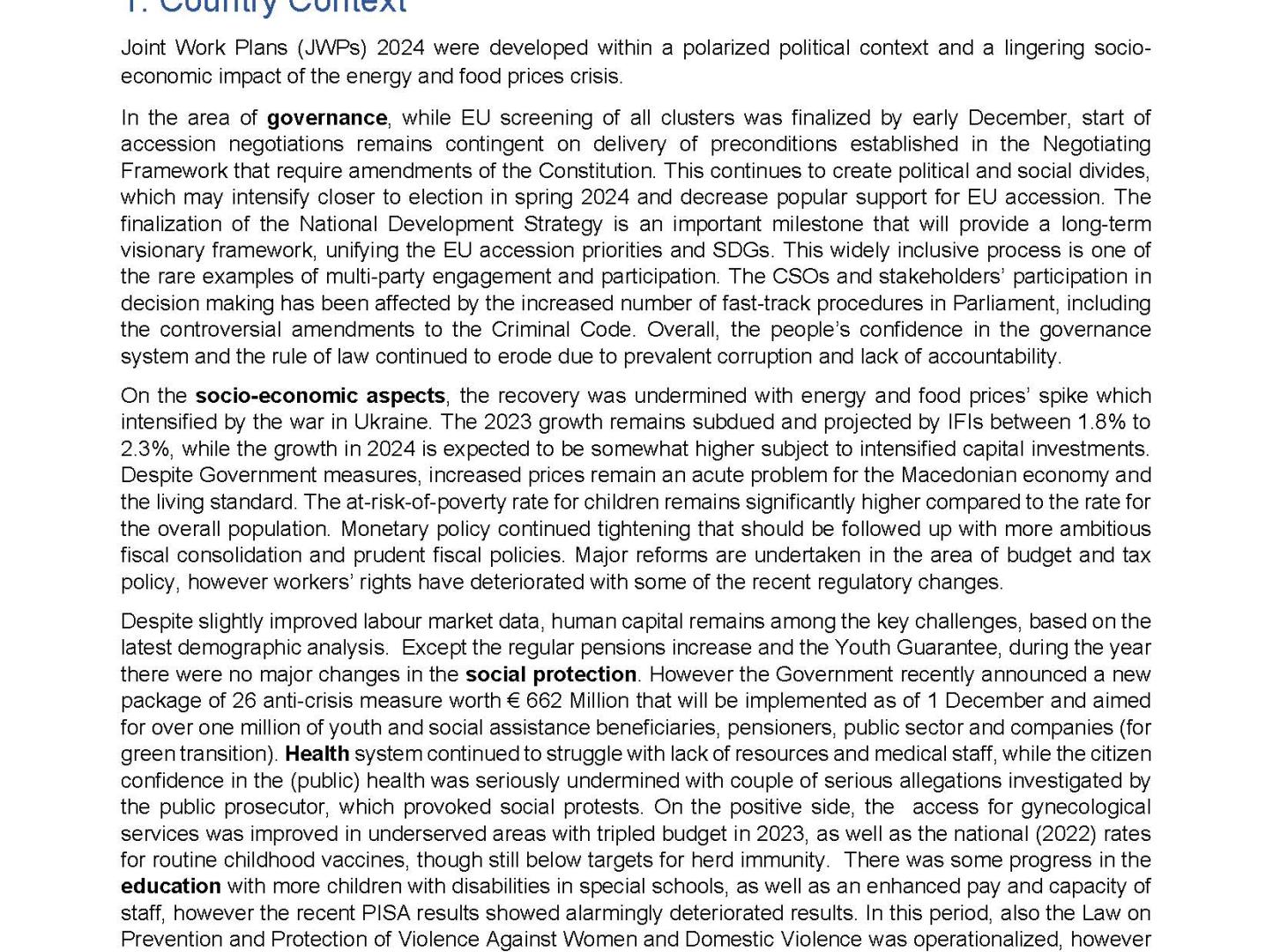
The members of the Joint Steering Committee discussed the 2022 UN annual results, the opportunities and challenges facing the country, and endorsed the 2023 Joint Workplans.
“Only with joint efforts we can protect humanity and nature, especially if we are committed to the achievement of Agenda 2030, nationally and globally. Full implementation of the Sustainable Development Cooperation Framework is the pathway towards achieving tangible change for people in North Macedonia, resulting in better legal, more efficient and more responsible institutions and greater future for everyone”, said Fatmire Isaki, Deputy Minister of foreign Affairs.
SDCF is a key strategic document that guides the work of UN in North Macedonia and represents the UN development system’s collective offer to support the country in achieving sustainable development goals. To ensure that it reflects the interest and priorities of all people in the country, the SDCF has been developed through a participatory and consultative process, starting with the analysis of the country’s development context, strategic prioritization and its operationalization through annual workplans of UN entities and stakeholders.
“The context has evolved significantly since SDCF’s inception in 2020. COVID-19 and its immediate and long-term socio-economic impact, followed by the current energy, food security and finance crises – all shaped by the war in Ukraine – have put a significant strain on the Government to continue prioritizing reform processes and structural changes as the fiscal space has been shrinking and vulnerabilities increasing,” says Rossana Dudziak, UN Resident Coordinator in North Macedonia. “Targeted and focused expert advice and support, underpinned by the focus on leaving no one behind will remain the key pinnacle of UN work in North Macedonia in 2023 and beyond.”
The 2021-2025 UN SDCF also reflects the UN Secretary General’s plea for accelerated action to implement Agenda 2030 through a Decade of Action.
1 of 5
Latest Resources
1 / 11





1 / 11